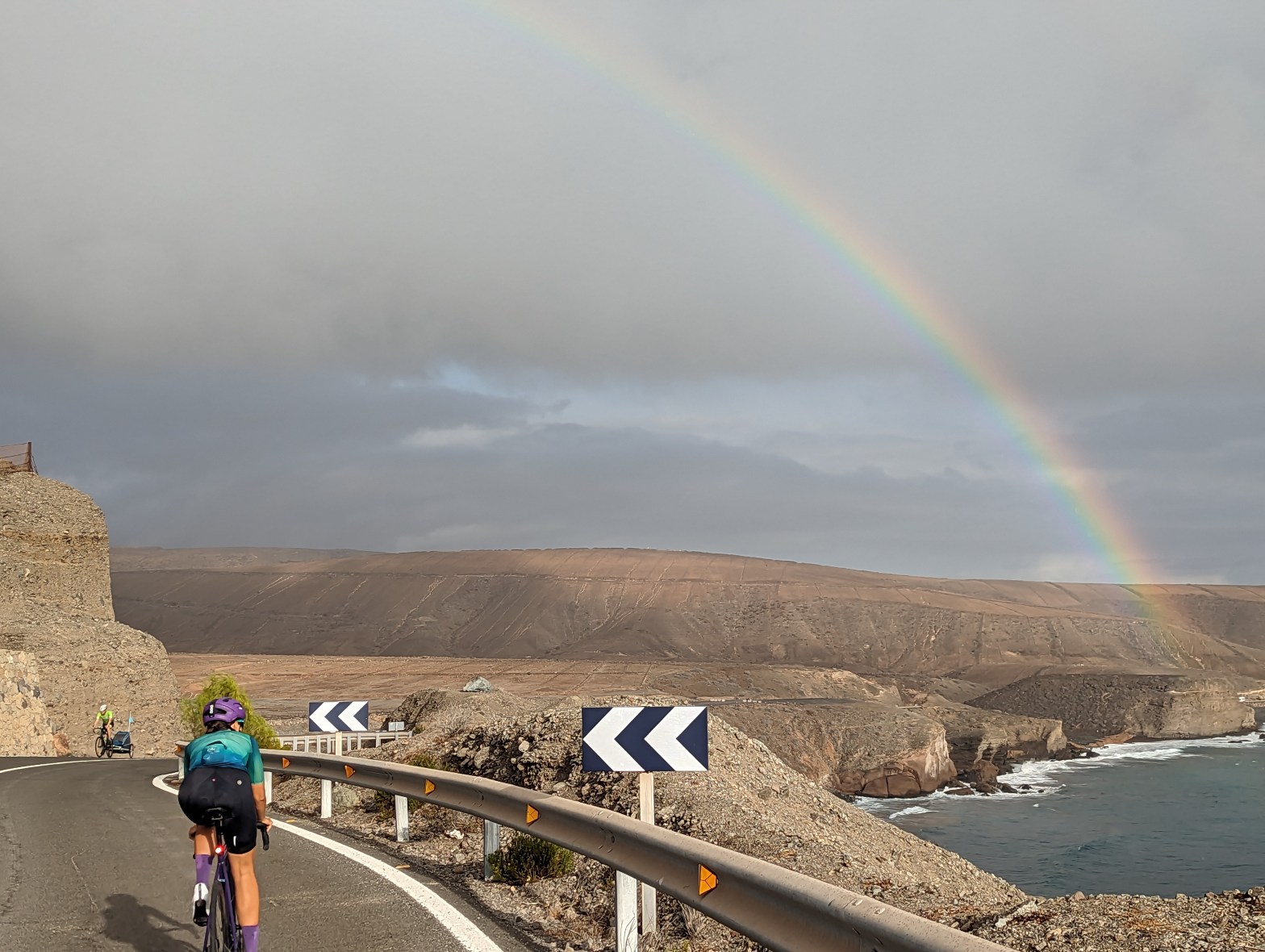
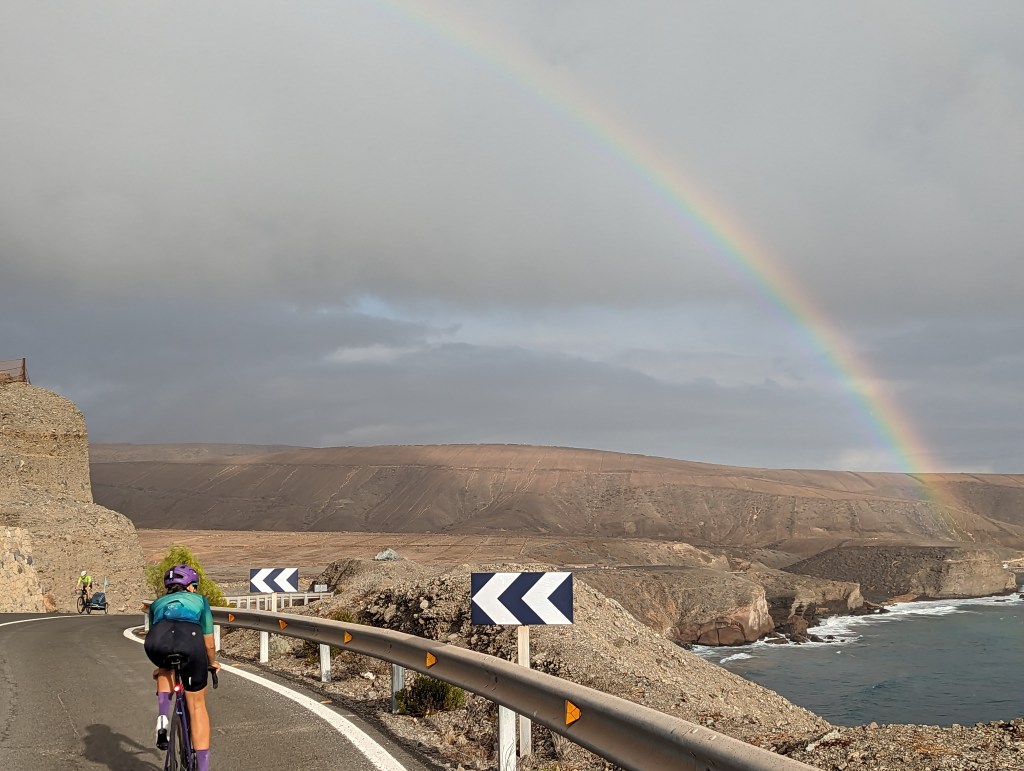
Rainy days here in the south of Gran Canaria have gotten us thinking about the weather, here where the sun is usually an infallible presence. A weather system is swirling a bit northerly of us, and bringing some southwesterly wet winds.
Well, but what can cyclists typically expect here from the weather?
The Canary island archipelago is located around 3000km north of the equator, about 100km west of Morocco, and boasts some of the most stable weather anywhere in the world.
In fact, in a comprehensive worldwide study of ‘Pleasant Weather Ratings’ by climatologist Thomas Whitmore, Las Palmas- the capital city of Gran Canaria, come out as #1 out of the 600 cities studied for climate favourability; and in fact the only one scoring a perfect 100 rating. What a lovely list to top..!
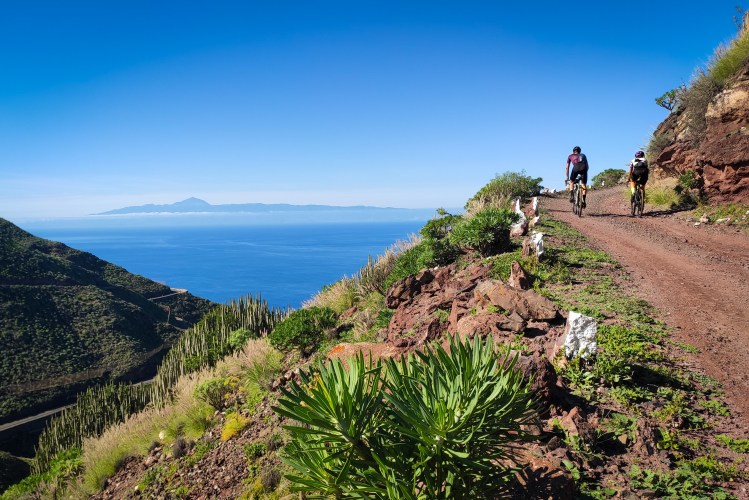
What does this mean in real life? Well it represents that it’s climate year-around is mild, without excesses of heat, cold or other adverse weather conditions, and in reality this translates to winter temperatures ranging around 15-25 degrees at sea level, with average summer temperatures between 20-30 degrees. Sunshine hours per day vary from a wintery ‘low’ of 6 hours average, to 10 hours of daily sunshine on average in the summer, and in the wetter winter months, an average of 3 days per month where some rain is registered.
Averages aside, Gran Canaria is often referred to as the ‘microcontinent’, for its wide variety of terrains and climatic mini-zones. A roughly-round island barely 50km in diameter, it is more or less one large cone tented-up in its centre at the morro de la Agujerada (the sharp rocky peak beside Pico de las Nieves, which is the highest road of the island).
This vertical reach in such a short distance leads to variations that can on occasion mean the name ‘Pico de las Nieves’ (peak of the snows), is literally justified, even on a day where it might be 20 degrees plus at the southern coast not far away!
The typical winds tend to be northeasterly, bringing cool and wetter air that tends to get hung up on the northern slopes, meaning the northern half can often have a wet day when the south has only blue skies.
For those tempted by a sea swim, water temperatures tend to be around 18-20 degrees- positively bathtub-like compared to our other favourite Atlantic isle: Ireland!
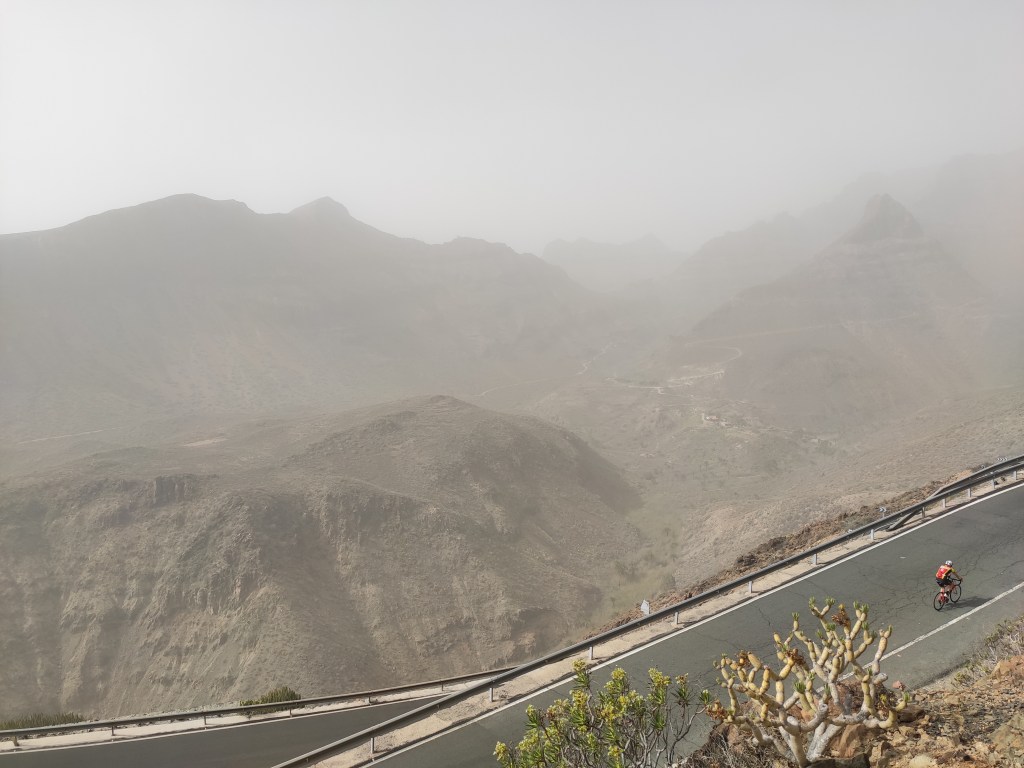
Occasionally ‘calima’ winds can carry Saharan dust to the islands, which can bring a haziness, often accompanied by an oppressive heat and poor air quality. These sand and dust clouds typically last in the region of 2-4 days, and are more frequent in the winter months. While it may appear just an odd phenomenon that renders everything looking like Venus or something out of Madmax, the air can actually be laden with various toxic chemicals from power plants, petrochemical or mining processes in Morocco or Algeria, and it is recommended to avoid vigorous exercise during such events. In fact, those with respiratory sensitivities should stay indoors where possible. We recommend monitoring air quality on resources such as this.
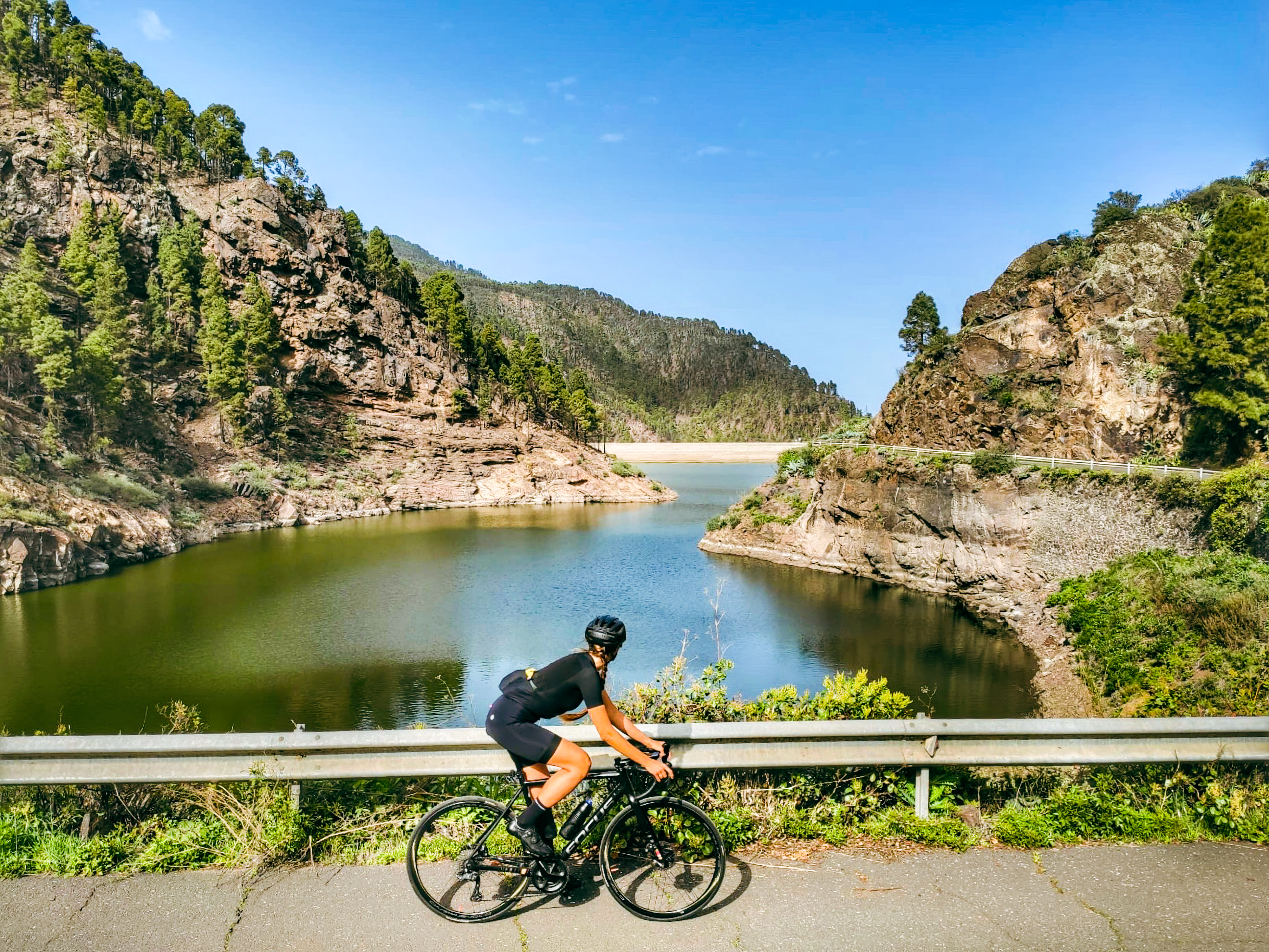
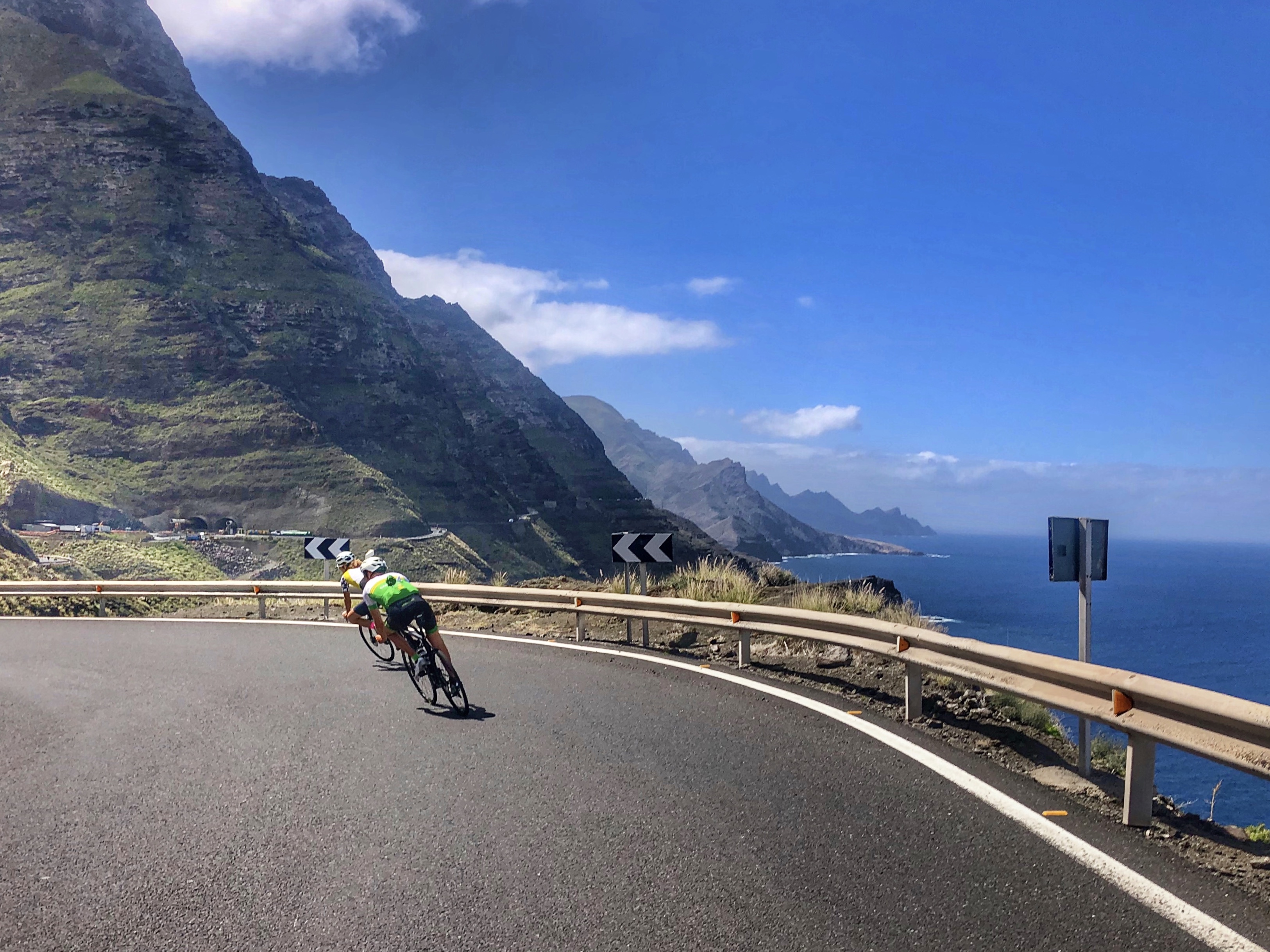
Back to the rain we are having at the moment, it’s just what the island needs right now, after a summer that has seen the reservoirs depleted to shocking lows. However, a word of caution if you do find yourself riding on Gran Canaria in the rain: it is very easy to get caught out here. Many people are used to riding in the rain in their home countries, but generally they will have more appropriate clothing there, and will not be facing into 30+ kilometres of consistent descending, like you will readily encounter here!
Furthermore, due to the low levels of rain, when it does rain, the roads tend to have a lot of dirt, oil and debris washed out onto them, meaning the risks of accidents and punctures is much higher. Additionally, drivers are less used to wet conditions than they might be in other countries.
Lastly, the island is like a big dry apple crumble; any prolonged period of persistent rain is bound to lead to landslides and road closures somewhere in the mountains!
These exceptions aside, riding in Gran Canaria calls for shorts and short sleeves on practically all occasions, however, if going above 500 metres, it’s generally a good idea to bring at least a light gilet with you for the descents, or above 1000m a light jacket, and if even higher perhaps even a buff, arm warmers or gloves.
Another note regarding equipment would be about wheels: a mountainous rock in the middle of the Atlantic is certainly prone to some winds, and wheels above about 45mm depth can be a lot to handle in the eastern or western parts of the island, particularly for lighter riders.
Happy riding on this paradise rock !
 VeloVegano
Lovely stuff here, Constantin!! Very well phrased and lots of solid information for every interested rider!! Great idea to put this together!!
snowy greetings from your other favourite island in the Atlantic ⛄️🥶❄️🙋🏽♀️🌨️☘️🙋🏽♀️
LikeLike